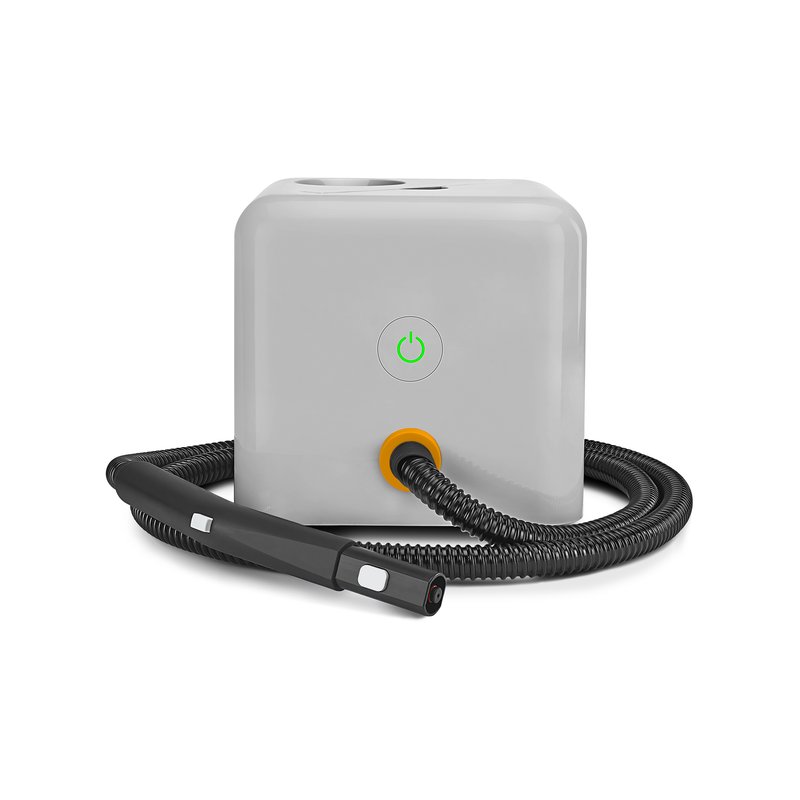
Best for grout#1
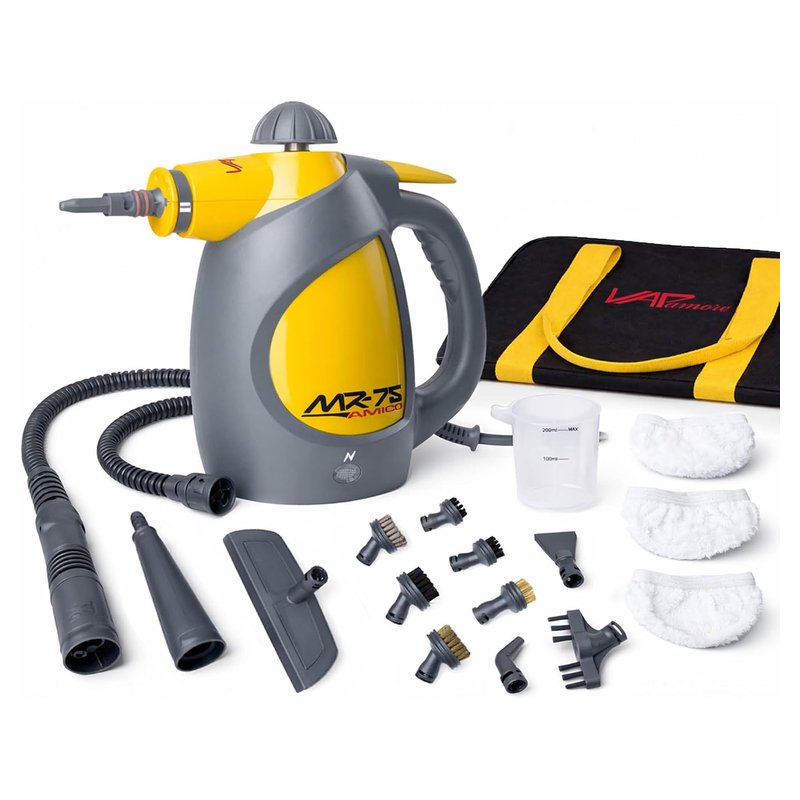
Vapamore MR-75 Amico
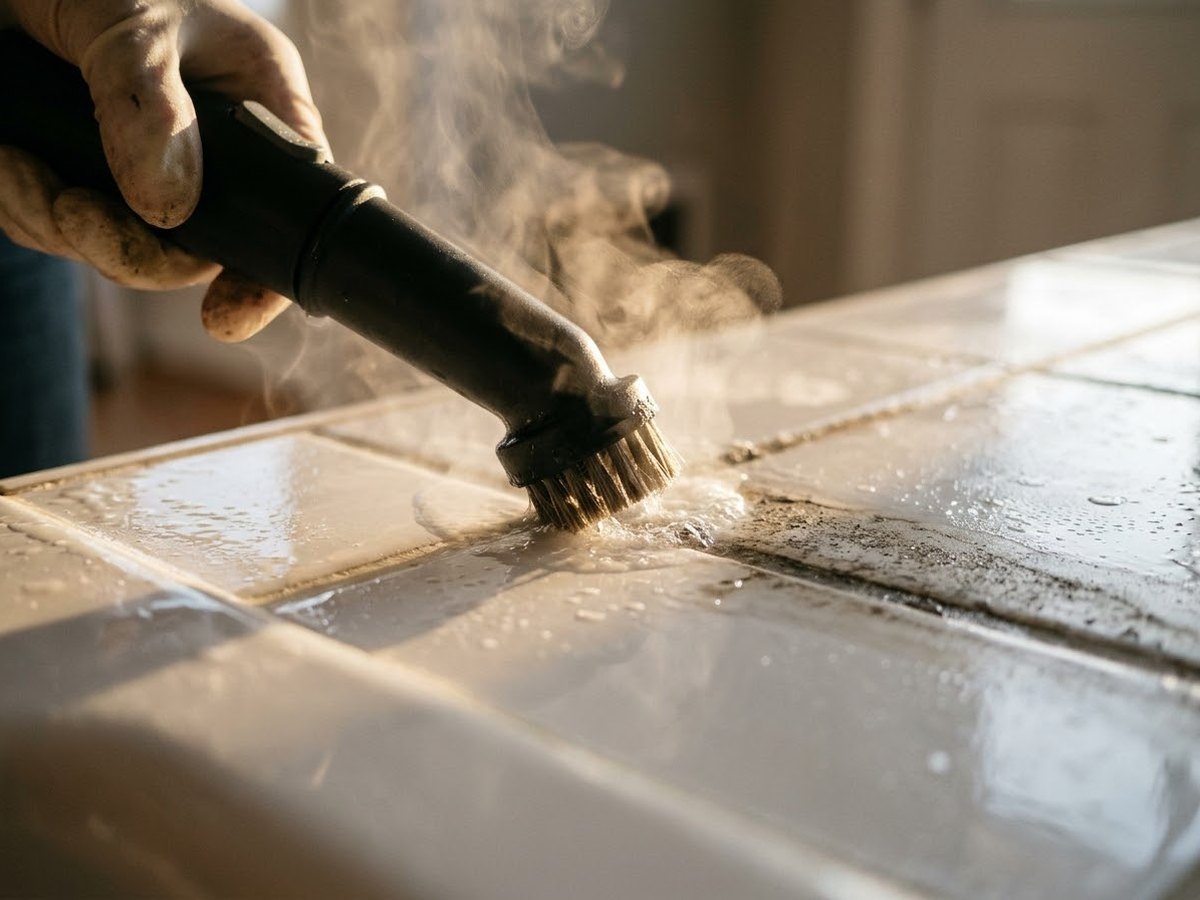
NBC Select names the MR-75 best for grout, citing a cleaning professional who calls it a favorite at his company. It costs more than the budget handhelds, and what the extra pays for is the kit: a dedicated grout brush, metal brushes and a stated pressure figure.
Why it stands out
- Vapamore states 43.5 psi and 200–210°F steam output, which few handheld makers publish.
- The box holds four nylon brushes including a grout brush, two brass brushes, a stainless steel brush, a fabric tool and a carrying case.
- A 3 ft steam hose reaches tight spots, and Automoblog rates it its best handheld for cars.
TypeHandheld with hose
Tank6.7 fl oz
Heat-up4 minutes
Run per fillNot published
Steam & reach43.5 psi; 3 ft hose; 10 ft cord
Good fit if
- Grout and tile lines are your main job.
- You want metal brushes included for hard, heat-safe surfaces.
- You clean a car interior and want a hose for tight spots.
Skip it if
- You want the lowest price; the budget handhelds here cost much less.
- You want to lock the steam on: Automoblog lists the missing trigger lock as a drawback.